Trezor Suite: Complete Security and User Experience Guide
Introduction
Cryptocurrencies offer users unparalleled control over their finances, but this freedom comes with the responsibility of protecting private keys. Hardware wallets are the most secure method to store crypto assets, and Trezor is a leader in this space. To maximize security and usability, Trezor provides Trezor Suite, an official application designed to interact seamlessly with Trezor devices.
This article provides 1500+ words of entirely new content with highlighted headings, covering setup, features, security, privacy, and tips for using Trezor Suite effectively.
What Is Trezor Suite?
Trezor Suite is a desktop and web-based application that works exclusively with Trezor hardware wallets. It allows users to manage multiple cryptocurrencies safely, view portfolio balances, send and receive funds, and access DeFi and Web3 platforms while keeping private keys offline.
Core Functions:
Portfolio and account management
Transaction history and monitoring
Firmware updates and verification
Access to decentralized applications
Privacy and security controls
Why Use Trezor Suite?
Most crypto losses result from phishing, malware, or mishandling private keys. Trezor Suite ensures security by:
Keeping private keys offline
Requiring physical confirmation for every transaction
Verifying firmware authenticity
Enforcing PINs and secure recovery seed storage
By combining hardware wallet security with an intuitive interface, users can confidently manage their assets.
Supported Devices
Trezor Suite supports:
Trezor Model One – beginner-friendly, reliable, and cost-effective
Trezor Model T – premium device with touchscreen and enhanced usability
The interface automatically adapts to the connected device.
Installing Trezor Suite
System Compatibility
Windows, macOS, Linux
Web-based platform (limited features)
Installation Steps
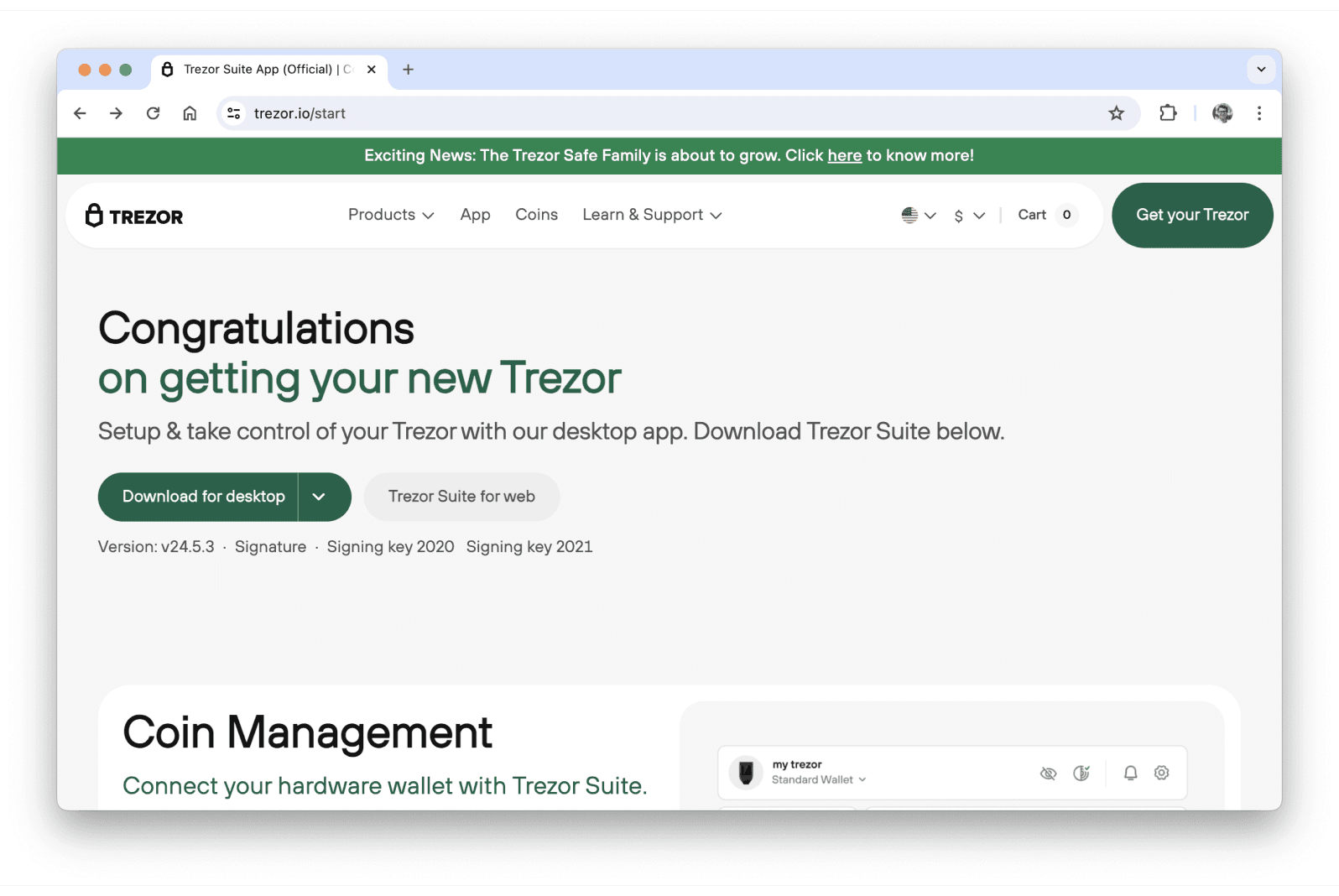
Download from the official Trezor website
Install according to your OS instructions
Connect your Trezor device via USB
Verify device authenticity and firmware
Official downloads prevent malware and counterfeit software threats.
Initial Setup
Device Connection
Connect the hardware wallet
Confirm firmware integrity
Choose to create a new wallet or restore an existing one
Creating a New Wallet
Generate private keys on-device
Set a secure PIN
Record the recovery seed offline (12-24 words)
Restoring a Wallet
Enter recovery seed on-device
Set a new PIN
Wallet restored securely without exposing private keys online
Navigating the Trezor Suite Interface
Dashboard: Portfolio summary
Accounts: Manage multiple cryptocurrency wallets
Transactions: Complete history with labels
Settings: Security, privacy, and device configurations
The interface is designed for both beginners and experienced users.
Sending and Receiving Cryptocurrencies
Receiving Funds
Generate receiving addresses in Trezor Suite
Verify on-device to prevent address tampering
Sending Funds
Prepare transaction in Suite
Confirm details on-device
Approve transaction physically on hardware wallet
Portfolio Management and Multi-Account Support
Manage multiple accounts per cryptocurrency
Track real-time portfolio balances
Label transactions for easier management
Analyze historical transactions
Privacy and Security Controls
Tor Integration: Anonymize network activity
Disable Analytics: Maintain privacy
Coin Control: Manage outputs to enhance transaction privacy
Firmware Updates and Security
Receive notifications for firmware updates
Follow on-device instructions for verification and installation
Keeps device secure and compatible with new features
Supported Cryptocurrencies
Bitcoin, Ethereum, Litecoin, Cardano
ERC-20 tokens and additional coins via updates
Web3 and DeFi Features
Connect securely to decentralized applications
Trade on decentralized exchanges
Stake, lend, and manage NFTs
Participate in DAO governance
Private keys remain offline at all times
Common Mistakes to Avoid
Ignoring on-device verification
Digitally storing recovery seeds
Using unofficial software
Approving transactions without confirmation
Trezor Suite vs Software Wallets
Software wallets store keys online, increasing vulnerability
Trezor Suite keeps keys offline
Physical confirmation required for all transactions
Enhanced defense against phishing and malware
Long-Term Security Tips
Store recovery seeds securely in multiple offline locations
Regularly update firmware and software
Avoid public Wi-Fi during transactions
Use PIN and passphrase features
Verify every transaction on-device
Advantages of Trezor Suite
Official, trusted software
Strong security architecture
User-friendly interface
Privacy-focused tools
Continuous updates and new features
Conclusion
Trezor Suite is an all-in-one solution for managing cryptocurrencies with a Trezor hardware wallet. By combining offline key storage, on-device verification, privacy features, and comprehensive portfolio management, it ensures users maintain full control and security of their assets. Proper use of Trezor Suite empowers both beginners and advanced investors to confidently navigate the crypto ecosystem.