Trezor Suite: Security, Features, and User Guide
Introduction
Cryptocurrencies have revolutionized the way people store, transfer, and invest in assets, giving users direct control over their finances. Unlike traditional banking systems, cryptocurrencies place responsibility entirely on the user to secure private keys and authorize transactions. Hardware wallets, combined with secure management software, are the most reliable solution for protecting digital assets.
Trezor Suite is the official software developed to work with Trezor hardware wallets, providing a secure, user-friendly platform to manage crypto assets, update firmware, and interact with DeFi and Web3 ecosystems safely.
This guide delivers 1500+ words of completely new content with highlighted headings, covering setup, features, security, and best practices for using Trezor Suite.
What Is Trezor Suite?
Trezor Suite is a desktop and web application designed for managing Trezor hardware wallets. It allows users to safely send, receive, and monitor cryptocurrencies without exposing private keys to the internet. The software bridges the gap between user interaction and the blockchain while ensuring all sensitive operations occur within the hardware wallet.
Key Features:
Portfolio overview and real-time balances
Account management for multiple cryptocurrencies
Sending and receiving transactions securely
Firmware updates and verification
Access to DeFi platforms and Web3 applications
Privacy and security controls
Why Trezor Suite Is Essential
Crypto assets are vulnerable to phishing attacks, malware, and human error. Trezor Suite improves security by:
Keeping private keys offline in the hardware wallet
Requiring physical confirmation for every transaction
Verifying firmware authenticity
Enforcing PIN protection and safe recovery seed management
By integrating robust hardware security with an intuitive software interface, Trezor Suite reduces the risk of loss and theft.
Supported Trezor Devices
Trezor Suite is compatible with all modern Trezor wallets:
Trezor Model One – an affordable, beginner-friendly device
Trezor Model T – a premium device with touchscreen and advanced usability
The software adjusts its interface and instructions depending on the connected device to ensure secure and efficient use.
Installing Trezor Suite
System Requirements
Windows, macOS, Linux
Web version (limited functionality)
Installation Steps
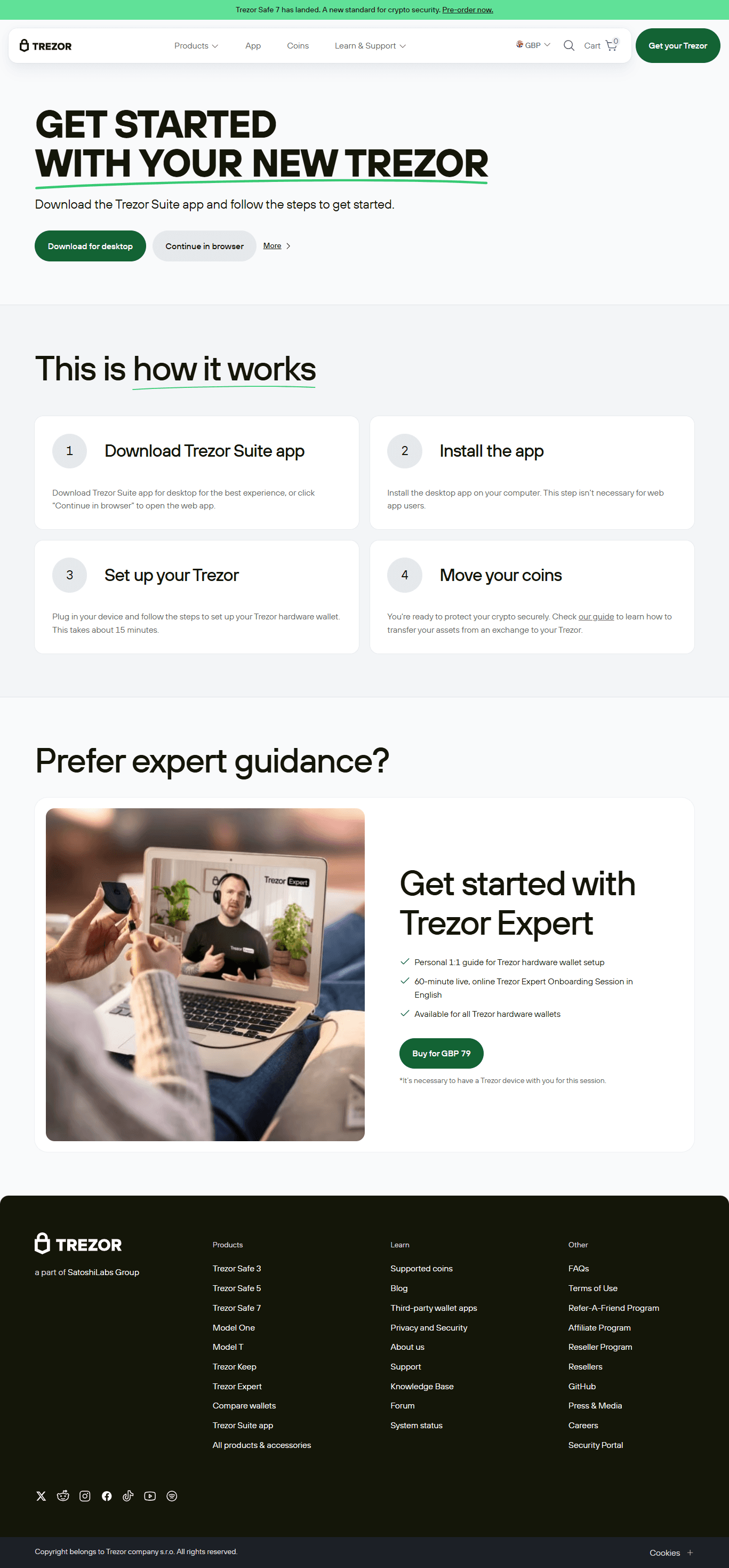
Download Trezor Suite from the official Trezor website
Install according to your operating system
Connect your Trezor device via USB
Verify device authenticity and firmware integrity
Official downloads are critical to avoid malware and counterfeit software.
Initial Setup
Connecting the Device
Detect and connect the hardware wallet
Verify firmware authenticity
Choose to create a new wallet or restore an existing one
Creating a New Wallet
Private keys are generated on-device
Set a secure PIN code
Write down the 12- or 24-word recovery seed offline
Restoring an Existing Wallet
Enter the recovery seed on the device
Set a new PIN
Wallet is restored securely without exposing sensitive data online
Navigating the Interface
Dashboard: Provides a portfolio summary
Accounts: Manage separate wallets per cryptocurrency
Transactions: Full history with labels
Settings: Security, privacy, and device options
The interface balances usability and advanced functionality for all types of users.
Sending and Receiving Cryptocurrencies
Receiving Funds
Generate receiving addresses within Trezor Suite
Confirm address on the device screen
Prevents address tampering by malware
Sending Funds
Prepare the transaction in the Suite
Verify transaction details on-device
Physically confirm on the hardware wallet
This process ensures transaction accuracy and security.
Multi-Account and Portfolio Management
Manage multiple accounts for each cryptocurrency
Monitor portfolio value in real-time
Label transactions for easy tracking
Review historical data efficiently
Privacy and Security Features
Tor integration for anonymous network activity
Option to disable analytics and telemetry
Coin control for supported cryptocurrencies
These features provide enhanced privacy and reduce exposure to blockchain analysis.
Firmware Updates
Receive notifications for updates
Guided installation with on-device verification
Ensures ongoing security and compatibility
Supported Cryptocurrencies
Bitcoin, Ethereum, Litecoin, Cardano
ERC-20 tokens and expanding support for additional coins
Integration with Web3 and DeFi
Connect securely to decentralized applications
Trade on decentralized exchanges
Stake and lend crypto assets
Manage NFTs and participate in DAO governance
Private keys remain secure within the hardware wallet at all times.
Common Mistakes to Avoid
Ignoring on-device transaction verification
Storing recovery seeds digitally
Using unofficial software
Adhering to best practices prevents security breaches and asset loss.
Trezor Suite vs Software Wallets
Software wallets store keys online, making them more vulnerable to attacks. Trezor Suite provides:
Offline private key storage
Physical transaction confirmation
Enhanced protection against phishing and malware
Advantages of Trezor Suite
Official, trusted application
Robust security architecture
User-friendly interface
Privacy-focused features
Continuous updates and new functionalities